
The 5 Best Parking Sensors [Ranked]

Parking sensors use ultrasonic pulses to detect objects behind (or in front of) your car and warn you before you hit them.
They’re especially useful for older cars that never came with any backup assistance from the factory.
An aftermarket kit adds that missing safety layer without a full backup camera install.
At a Glance: Which Parking Sensor Kit Do You Need?
- For a simple audio warning system: a basic buzzer alert kit — no display required.
- For precise distance feedback: a kit with an LED distance display , not just a beep.
- For older vehicles without any backup assistance: sensors are a genuine safety upgrade, though research shows a camera adds more protection than sensors alone.
- For front and rear coverage: confirm the kit includes enough sensors for both ends , since many budget kits only cover the rear.
The 5 Best-Selling Parking Sensors Right Now
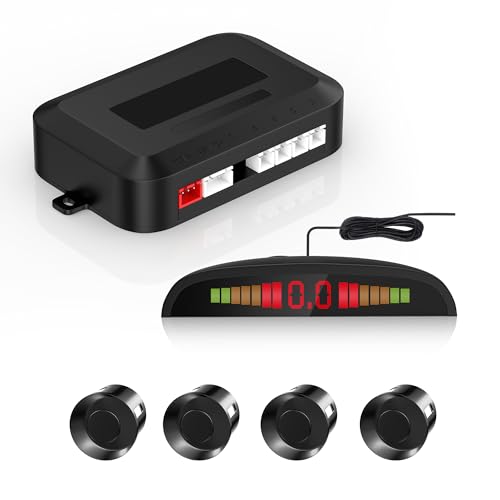
- Parking Sensors for Cars with Hole Saw This reverse parking sensor kit comes with a universal hole saw and drill head for easy installation on most vehicle bumpers. A perfect solution for enhancing any car’s safety with a car reverse backup sensor.

- Automatically detects obstacles behind the car when reversing, automatically turns on and on.

- When the product is working, the sensor emits ultrasonic waves. When encountering an obstacle, the ultrasonic waves are reflected. The sensor receives the reflected signal and transmits it to the control box. Through calculation, the control box obtains the distance between the vehicle and the obstacle, and reminds the driver to pay attention through the display and sound, etc., to avoid danger. It is a good helper for us to drive the car!

- Vehicle Specific Fit:Suitable for cars, SUVs, pickups, vans, RVs, etc.
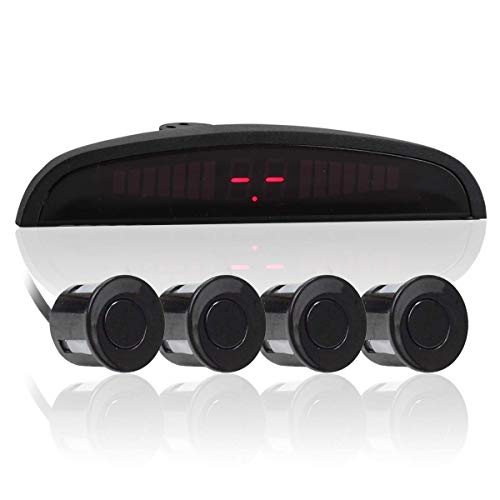
Why Rear Visibility Is a Real Safety Issue
This isn’t a manufactured problem.
Government research measuring actual rear blind spots found they average 14 feet for a taller driver and stretch to 23 feet for a shorter one, depending on the vehicle (Source).
Larger vehicles make it worse.
Pickup trucks and vans have the longest blind spots of any vehicle category, and both show meaningfully higher backover injury rates than passenger cars, with children especially at risk.
Sensors vs. Cameras: The Honest Comparison
This is worth being upfront about before you buy.
Independent crash research from the Insurance Institute for Highway Safety found rearview cameras cut backing crashes by 16% on their own (Source).
Cameras alone actually outperformed sensors alone in that research — cameras reduce a driver’s blind zone by roughly 90%, while sensors provide proximity warnings without showing you what’s actually there.
The real winner is combining both. Vehicles with a backup camera, parking sensors, and rear automatic braking together showed a 78% lower backing crash rate than vehicles with none of it (Source).
So if your car already has a backup camera, sensors are a genuinely useful addition, not a replacement.
If your car has neither, a sensor kit is still meaningfully better than nothing — it just isn’t the single best option if a camera install is realistically on the table too.
Sensor Kit Types Compared
| Type | Feedback Method | Installation | Best For |
|---|---|---|---|
| Basic audio-only | Beeping tone, faster as you approach an object | Simplest, bumper-mounted sensors + wiring to a buzzer | Budget installs, simple rear coverage |
| LED display | Visual indicator lights showing rough distance zones | Adds a small dash or mirror-mounted display | Drivers who want visual confirmation, not just sound |
| LCD distance readout | Precise numeric distance display | Similar install, more detailed display unit | Precise parking in tight spaces |
| Wireless sensor kits | Beep or display, no wiring through the trunk/cabin | Easiest DIY install, sensors transmit wirelessly to display | Avoiding drilling or running wires through the vehicle |

What to Look For
- Number of sensors. More sensors generally mean better lateral coverage, not just detection range straight back.
- Bumper color matching. Many kits include paintable sensor covers — check whether yours ships pre-colored or needs painting to match your vehicle.
- Display type. Decide whether a simple beep is enough or you want a visual distance readout, since this affects both price and installation complexity.
- Wired vs. wireless. Wireless kits are easier to install but add another battery to maintain; wired kits are more involved but need no separate power source.
- Detection range. Check the specific range in inches or feet — a sensor that only triggers a foot before contact isn’t giving you much reaction time.
Watch: How Parking Sensors Work
Who Benefits Most
- Owners of older vehicles. Cars from before backup cameras became standard equipment are the clearest use case — sensors add a safety feature that was never there.
- New or less-experienced drivers. Extra proximity feedback helps build spatial awareness while judging distances is still developing.
- Anyone driving a larger vehicle. Trucks, vans, and SUVs have longer blind spots by nature, making the added warning more valuable.
- Households with young children. Backover incidents disproportionately involve small children who aren’t visible in mirrors or over a trunk lid, making any additional detection layer worthwhile.
- Frequent tight-space parkers. If you’re regularly navigating narrow driveways, garages, or dense street parking, precise distance feedback pays off constantly, not just occasionally.
Common Problems and Fixes
False alerts with nothing behind you
Usually caused by a dirty sensor face, a loose mounting, or interference from a trailer hitch or bike rack permanently in range.
Clean the sensors first, then check mounting security before assuming a defective unit.
No alert when there should be one
Check that sensors aren’t obstructed by mud, snow, or bumper stickers placed directly over them.
Also confirm the unit is actually receiving power — a blown fuse on the reverse-light circuit is a common, easy-to-miss cause.
Inconsistent distance readings
Extreme temperatures and heavy precipitation can affect ultrasonic accuracy temporarily.
If inconsistency persists in normal conditions, a sensor may need replacement rather than just cleaning.
Installation Basics
Most kits follow a broadly similar process, though specifics vary by model.
- Plan sensor placement across the bumper, spacing them evenly for the widest detection coverage.
- Drill mounting holes at the marked positions — measure twice, since bumper holes aren’t easily undone.
- Route the wiring from each sensor to the control unit, typically through existing gaps or grommets where possible.
- Connect the control unit to a power source, often tied to the reverse light circuit so it only activates in reverse.
- Test thoroughly before considering the install finished, checking detection range and alert behavior at multiple distances.
Front vs. Rear Coverage: Do You Need Both?
Most buyers default to rear-only coverage, and for good reason — reversing blind spots are larger and backover incidents are the more commonly documented risk.
Front sensors earn their keep in different situations: nose-in parking against a wall or curb, tight garage spaces where a few inches matter, and taller vehicles where the front bumper sits well outside the driver’s direct line of sight.
If your daily parking routine regularly involves nosing up to a wall, a low curb, or a tight garage, front coverage is worth the extra sensors and installation time.
If you mostly park in open lots or driveways with no front obstacles, rear-only coverage covers the more meaningful risk without the added cost.
Parking Sensor FAQ
Do parking sensors work on trailer hitches?
Some kits accommodate this, but a hitch can trigger false alerts by being detected as a permanent obstacle — check the specific kit’s guidance if you tow regularly.
Can I install these myself, or do I need a mechanic?
Most kits are designed for DIY installation with basic tools, though drilling into your bumper is a real commitment — read the full instructions before starting if you’re not confident.
Will weather affect sensor accuracy?
Heavy rain, snow buildup, or mud on the sensor face can affect ultrasonic detection — keeping sensors clean matters more than most people expect.
Do I need sensors if I already have a backup camera?
Not strictly, but research shows the combination outperforms either alone — sensors add proximity alerts a camera doesn’t provide on its own.
How accurate is the distance reading?
Generally accurate within a reasonable margin for the stated range, but treat it as a guide rather than a precise measurement, especially near an object’s edges.
The Bottom Line
For an older car without any backup assistance, a parking sensor kit is a real, meaningful safety upgrade — just go in knowing a camera adds more protection on its own, and the two together outperform either alone.
If you’re choosing just one and a camera install is realistic for your vehicle, that’s the stronger single option.
If sensors are what’s practical for you, they’re still a genuine improvement over nothing.