
The 5 Best Donut Cushions [Ranked]
Donut cushions are ring-shaped seat cushions with a hollow center, designed to take pressure off a specific area — the tailbone, the perineum, or the area around a healing incision — rather than distributing your full weight evenly like a standard seat cushion does.
They’re recommended by clinicians for a genuinely wide range of conditions, but the shape isn’t universally the right answer for every situation, so it’s worth understanding what a donut cushion actually helps with before buying one.
At a Glance: Which Cushion Do You Need?
- For tailbone pain (coccydynia): a classic donut or a wedge-shaped cushion — Mayo Clinic notes some people find a wedge shape more effective than a ring (Source).
- For postpartum or pregnancy-related hemorrhoids: a standard donut cushion, which Cleveland Clinic lists as an at-home care option (Source).
- For pudendal neuralgia or pelvic floor pressure: a donut or U-shaped cushion, which takes pressure off the pelvic floor and perineum specifically (Source).
- For general long-sitting comfort without a specific medical condition: consider a full-support gel seat cushion instead — it distributes pressure evenly rather than isolating one area, which is usually more comfortable for all-day sitting.
The 5 Best-Selling Donut Cushions Right Now

- [High Quality Seat Cushion] The size of the BlissTrends donut pillow is 17.4 "x 13.39" x 2.64 ". The surface layer is made of comfortable and breathable fabric, and the core is memory foam. The memory cotton inner core has enough support and resilience, which can make you more comfortable and will maintain shape even after many uses.. BlissTrends seat cushion can bring you comfort that ordinary cushion cannot provide, and take care of your body with even more care.

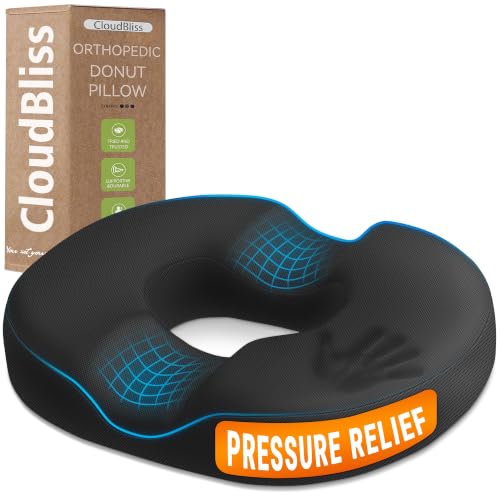
- [Suitable Size] CloudBliss donut pillow measures 17.44" x 13.39" x 2.64". The donut pillow stadium seat cushion can be taken anywhere, and can be used for any type of chair, such as wheelchair, office chair, airplane, car, bleachers at games, dining chair, etc. Its portable and lightweight design allows you to take it with you wherever you go, ensuring you never have to compromise on your comfort
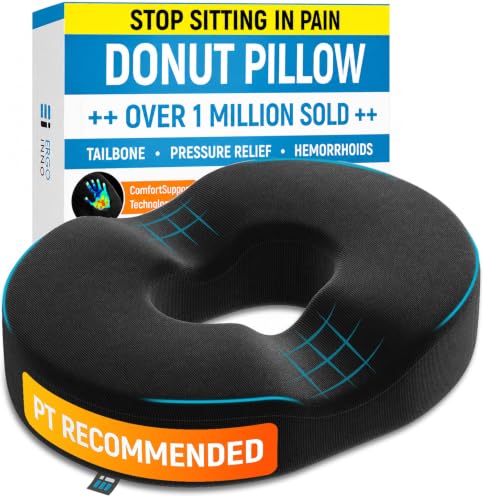
- Premium Ergonomic Support: Donut seat cushion constructed with firm memory foam maintains shape for up to 240 lbs; measures 17.5 x 14 x 2.75 inches; ideal hemorrhoid pillow for women and men seeking targeted pressure relief and comfort for sitting
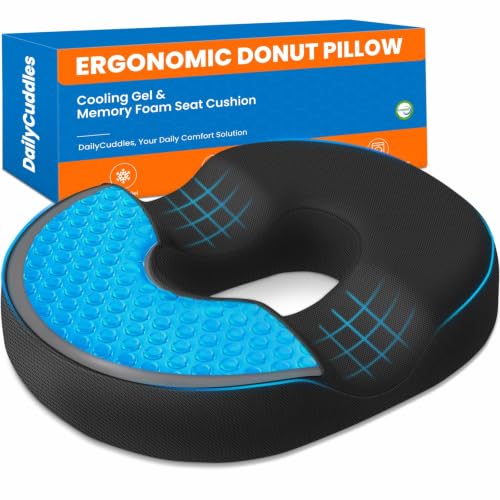
- Lasting Comfort: With high-density memory foam infused with cooling gel, this chair cushion for dining chairs provides supportive comfort that stays cool and resists flattening over time. The butt pillow is ideal for extended sitting at home, work, travel
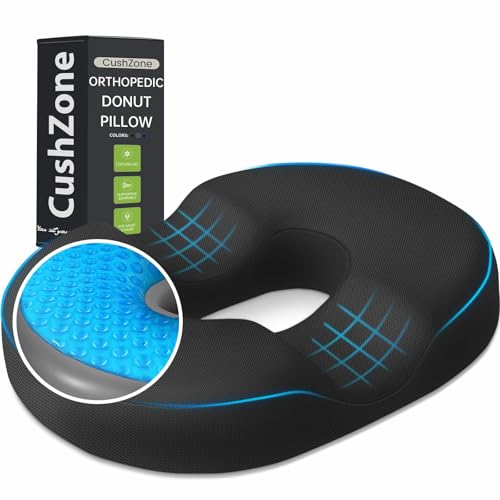
- [Premium Memory Foam & Cooling Gel]: CushZone donut pillow measures 17" x 13.5" x 2.8". Made with premium high density memory foam and cooling gel, this outdoor seat cushion provides supportive comfort and helps dissipate heat, making it suitable for both indoor use and outdoor seating settings
What a Donut Cushion Actually Helps With
Cleveland Clinic specifically recommends a donut pillow as part of at-home care for hemorrhoids during pregnancy, and separately for tailbone pain (coccydynia), where sitting on a donut pillow or wedge-shaped cushion helps take pressure off the painful area (Source). The same hollow-center design is also recommended for pudendal neuralgia, where it reduces pressure specifically on the pelvic floor muscles and perineum.
Common situations people use them for:
- Hemorrhoids, including pregnancy and postpartum hemorrhoids
- Tailbone pain / coccydynia, including after a fall or prolonged sitting
- Recovery after childbirth, episiotomy, or perineal surgery
- Prostate-related discomfort
- Pudendal neuralgia and general pelvic floor pressure
- Pressure sores or extended wheelchair/bed use
Mayo Clinic’s guidance is a useful reality check: tailbone pain often resolves on its own, and conservative measures like a cushion, alternating heat/ice, and over-the-counter pain relievers are the typical first step — medical treatment usually isn’t needed unless pain persists (Source).
Donut vs. Wedge vs. Gel: How to Choose
| Type | How It Works | Best For |
|---|---|---|
| Classic donut (ring) | Fully hollow center removes contact with one specific area | Hemorrhoids, coccydynia, post-surgical/pelvic pressure relief |
| Wedge-shaped coccyx cushion | Cut-out at the back edge relieves tailbone pressure without a full ring | Some tailbone pain cases — Mayo Clinic notes this can work better than a ring for certain people |
| Gel or memory foam (full support) | Distributes weight evenly across the whole seat | General all-day sitting comfort without a specific pressure-point condition |
| Inflatable donut | Ring shape, adjustable firmness via air, packs flat for travel | Travel, adjustable firmness preference |

Where You’ll Actually Use One
Fit and portability matter as much as the material once you know which condition you’re addressing:
- Office or desk chair: look for a low profile that doesn’t throw off your desk height, and a non-slip base so it doesn’t shift on a chair with a smooth seat.
- Car seat: a firmer, lower-profile option generally works better than a tall plush cushion, which can push you too high relative to the steering wheel and pedals.
- Wheelchair: pressure redistribution matters even more here given extended sitting time — check the cushion is rated for wheelchair use, not just general seating, since wheelchair cushions are sometimes built to a different pressure-relief standard.
- Travel: an inflatable ring that deflates for packing is worth the tradeoff in plushness if you’re dealing with a long flight or car ride.
Sizing and Material Considerations
- Memory foam holds its shape and contours to your body over repeated use, but can feel firm initially and may retain heat.
- Gel-infused foam adds some cooling and a slightly softer initial feel, usually at a higher price point.
- Inflatable vinyl/PVC rings let you adjust firmness by adding or releasing air, and pack flat — useful for travel, but less plush than foam.
- Check the hole diameter relative to your body size — a hole that’s too small won’t actually relieve pressure on the target area, and one that’s too large can feel unstable.
- Removable, washable covers matter more for this category than most cushions, given the use cases involved.
Watch: Physiotherapy Approaches to Tailbone Pain
Donut Cushion FAQ
Are donut cushions actually recommended for hemorrhoids, or is that a myth?
They’re a legitimate, commonly recommended conservative option — Cleveland Clinic lists a donut pillow specifically for at-home hemorrhoid care during pregnancy. That said, they work by reducing direct pressure on the area, not by treating the underlying cause, so ongoing symptoms still warrant a conversation with a healthcare provider.
Donut or wedge — which is better for tailbone pain?
It varies by person. Mayo Clinic notes both are used, and some people specifically find the wedge shape more effective. If one doesn’t help after a reasonable trial, it’s worth trying the other shape rather than assuming cushions in general aren’t working for you.
Can I use a donut cushion all day at a desk?
You can, but if you don’t have a specific pressure-point condition, a full-support gel or foam cushion that distributes weight evenly is usually more comfortable for general all-day use than a cushion designed to isolate pressure away from one area.
How long can I sit on one before it stops helping?
Getting up and moving periodically still matters regardless of cushion type — a donut cushion reduces pressure on a specific area, it doesn’t eliminate the general downsides of prolonged sitting.
Are these safe to use after childbirth or surgery?
Generally yes, and they’re commonly recommended for exactly this — but confirm with your doctor or midwife for your specific recovery situation, especially in the first days after delivery or a procedure.
The Bottom Line
A donut cushion is a well-supported, inexpensive first step for tailbone pain, hemorrhoids, postpartum recovery, and pelvic floor pressure — but it’s a targeted tool, not a general comfort cushion. If your goal is all-day sitting comfort without one of these specific conditions, a full-support gel or foam cushion will likely serve you better.

