
The 5 Best Digital Nail Printers [Ranked]

Digital nail printers are machines that print detailed images, patterns, and photos directly onto natural or artificial nails, instead of a nail technician painting each design by hand.
Nail industry publications have covered these machines for years as a way to speed up intricate nail art without sacrificing detail (Source). They’re used in two pretty different contexts: nail salons looking to offer a faster, more consistent premium service, and increasingly, home users who want salon-style nail art without a salon visit.
At a Glance: Which Nail Printer Do You Need?
- For salon use: a commercial-grade unit that can print onto multiple nails per cycle and handle heavy daily use.
- For home/personal use: a compact, portable model — smaller footprint, simpler app-based controls.
- For photo-quality designs: look specifically for models advertising true photographic printing, not just pattern templates.
- For beginners: prioritize an app with a large pre-loaded design library over one that requires you to create your own art from scratch.
The Best-Selling Digital Nail Printers Right Now
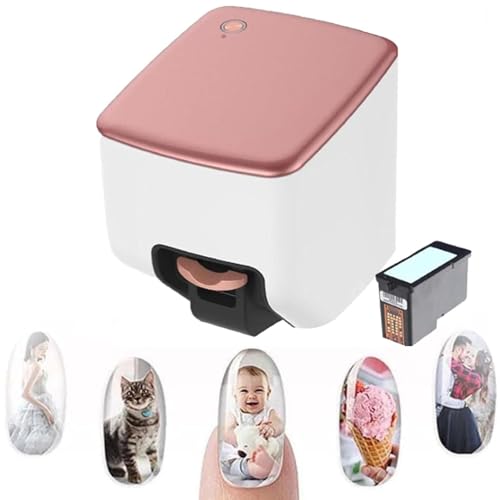
- 【Unlock Creativity With Smartphone & App】: Effortlessly personalize every manicure using 2026 commercial/home nail art printer machine,exclusive app grants you access to over 1,000 ready-to-print designs and allows you to upload personal photos or artwork for truly unique nail art,puts limitless customization at your fingertips, making it easy to match your nails to any outfit, mood, or special event directly from your phone.
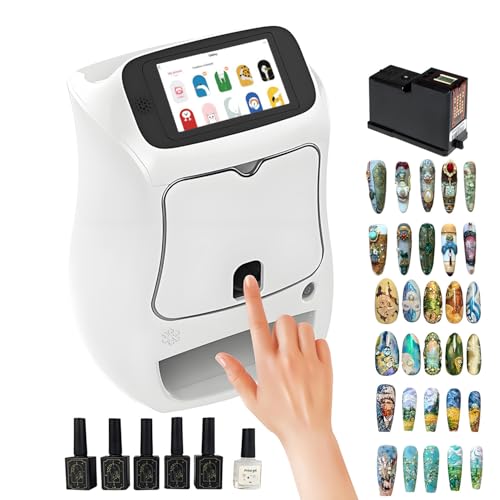
- 1️⃣【Smart APP & Touchscreen Control】Easily connect via WiFi or use the 5-inch HD touchscreen to access 3000+ built-in nail art designs. Upload your own photos or patterns through the app for unlimited creativity—no phone required for standalone use.
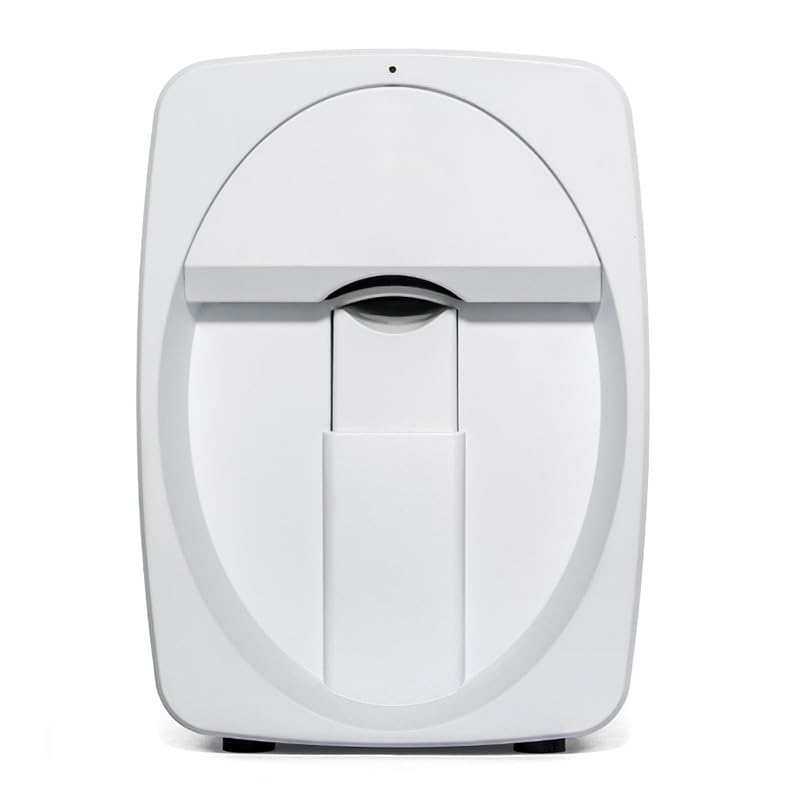
- Say goodbye to the limitations of traditional nail art! With the NAILS APP, yon upload any image from your phone/tablet gallery or choose from a vast collection of designer styles. The app features built-in editing tools that instantly transform your creativity into printable naily achieving "what you imagine is what you get." Whether it's intricate patterns, logos, photos, or personalized hand-drawn designs, KinetiZone can accurately rep

- 3D Nail Art Printer: Equipped with a spacious 10.1-inch HD touch screen for effortless control. Seamlessly connect via built-in WiFi and skip the complexity of manual painting — this 3D printer completes a nail design in about 30 seconds, compared to the 30 minutes traditional hand-painting often requires.

- 1. 🎨 Unlimited Creativity, Print Any Pattern onto Your Nails Say goodbye to the limitations of traditional nail art! With the NAILS APP, yon upload any image from your phone/tablet gallery or choose from a vast collection of designer styles. The app features built-in editing tools that instantly transform your creativity into printable naily achieving "what you imagine is what you get." Whether it's intricate patterns, logos, photos, or personalized hand-drawn designs, KinetiZone can accurately rep
How Digital Nail Printers Actually Work
Most modern units follow the same basic process: a small print head scans or is fed a design, then moves across the nail applying ink in precise layers through tiny nozzles, similar in principle to an inkjet printer working on a curved, irregular surface instead of flat paper (Source).
Ink comes in a few different formulations depending on the machine — some use UV-curable ink that hardens instantly under an LED light, others use water-based, skin-safe ink. Replacement ink cartridges typically run somewhere in the $20–$50 range, and a single cartridge can generally cover a couple hundred nails’ worth of printing before it needs replacing, so factor that into the ongoing cost beyond the machine itself.
Most current models are controlled through a companion smartphone app (iPhone and Android), which is where you’ll browse the pre-loaded design library, upload your own photos, or adjust a design before printing.
Salon vs. Home Use
Salon/commercial units
Commercial machines are built for volume — some can print onto all five nails on one hand in a single automated cycle rather than one at a time, and are designed for hours of continuous daily use. If you’re evaluating one for a salon, durability and throughput matter more than they would for occasional home use, and the machine functions as a genuine revenue add-on: offering a faster, more consistent premium service than hand-painted nail art.
Home/portable units
Portable and home-oriented printers trade some speed and volume for a smaller footprint and simpler operation — several current models can complete a full nail design in under a minute per nail. These are aimed at personal use or very small setups rather than a high-traffic salon chair, and the barrier to entry has dropped enough that home nail-art printers are now marketed even as a novelty gift item, not just professional equipment.

What to Expect: Setup, Learning Curve, and Nail Prep
- There’s a learning curve. Most buyers report the app and basic printing are easy to pick up, but getting consistent, professional-looking results — especially with your own custom photos — takes some practice.
- Nail prep still matters. A clean, dry, properly shaped nail (or a base coat, depending on the model) generally produces better print results than skipping prep.
- Printed designs typically last 10–20 days under normal wear, similar to standard nail polish, before touch-up or reapplication.
- Most units auto-detect nail size and curvature so the design maps correctly to the nail’s surface rather than printing a flat, uncalibrated image.
Watch: A Nail Art Printer in Action
Nail Printer vs. Nail Art Stickers
If a full printer feels like more than you need, nail art stickers and decals are the low-cost alternative — designs are pre-made and simply adhered to the nail rather than printed onto it. They’re cheaper and require no equipment, but they don’t offer the same photo-level customization, and a skilled technician still needs a steady hand and some time to apply them cleanly. A printer’s advantage is consistency: every nail gets the same precise result without depending on manual technique.
There’s also a hybrid middle ground worth knowing about: some salons use printers specifically for complex, repeatable elements — a logo, a photo, fine linework — while still hand-finishing simpler parts of the design. You don’t necessarily have to pick one approach exclusively; a printer can supplement rather than fully replace a technician’s hand-painted work.
Nail Printer FAQ
Can I print my own photos, or just pre-loaded designs?
Most current models support both — a library of pre-loaded designs for quick use, plus the ability to upload and print your own photos or custom artwork through the companion app.
Is this worth it for a home user, or only for salons?
Both markets exist now. Salons benefit from the speed and consistency at volume; home users are buying compact, portable models mainly for the novelty and creative control, similar to how home 3D printers appeal to hobbyists rather than only manufacturers.
How long does one design take to print?
It varies by model, but many current portable units advertise printing a full design in well under a minute per nail — some as fast as 20–30 seconds.
Do I need special nail polish or a specific base coat?
Check your specific model’s requirements — some print directly onto a standard base coat or bare, prepped nail, while others specify a particular compatible polish or gel base for best ink adhesion.
What’s the ongoing cost beyond the machine itself?
Budget for replacement ink cartridges (roughly $20–$50 each, covering a few hundred nails), and factor that into the total cost of ownership rather than just the upfront machine price.
The Bottom Line
Digital nail printers have moved well past novelty status — salons use them to speed up intricate nail art and add a monetizable service, and home users now have compact, affordable options for the same design precision without a salon visit. Whichever you’re buying for, weigh throughput and durability needs (salon) against footprint and simplicity (home) more than raw feature lists, since most current models cover the core photo-printing capability either way.

