
The 5 Best Leg Lifters [Ranked]
Leg lifters are simple strap-and-loop devices that help you move a leg you can’t easily lift yourself — into bed, out of a car, or over the side of a bathtub.
You slip the loop around your foot or ankle, hold the strap or handle, and use your arms to guide the leg where it needs to go instead of straining to lift it directly.
For anyone recovering from hip or knee surgery, or managing limited leg strength and mobility more generally, that’s a genuinely simple solution to an otherwise daily frustration.
At a Glance: Which Leg Lifter Do You Need?
- For general use: a standard leg lifter strap with a secure foot loop and comfortable handle.
- For post-hip-replacement recovery: confirm the design works within your specific hip precautions before relying on it daily.
- For car transfers specifically: a lighter, more compact design is easier to keep in the vehicle and use one-handed.
- For bathtub use: prioritize a water-resistant strap material that won’t degrade with repeated moisture exposure.
The 5 Best-Selling Leg Lifters Right Now

- MULTI-LOOP HANDLE 42 INCH LEG LIFTER FOR EASIER HOLD AND MORE EFFECTIVE MANEUVERABILITY FOR WEAK OR INJURED LEGS---Whether you're recovering from a leg injury, hip surgery, or dealing with limited mobility, the multi-loop handle design offers a more comfortable and secure grip that allows for better control when positioning your leg on a bed, wheelchair, or even in a car.
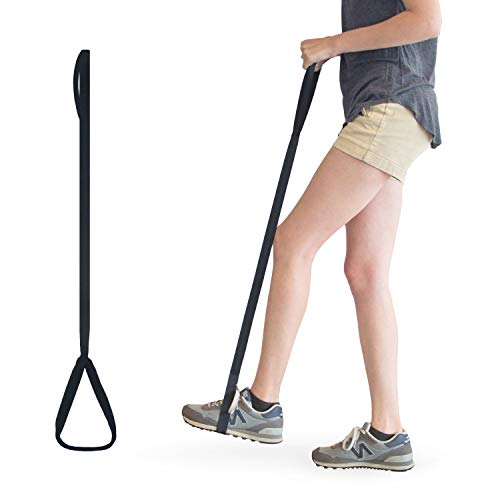
- 42" Long LEG LIFTER STRAPS - Helps you easily maneuver your legs to get out of chairs, wheelchairs, beds, or cars. These highly rated, top quality leg lifters are effective at increasing your mobility.
- 35" LONG LEG LIFTER STRAPS - Helps you easily maneuver your legs to get out of chairs, wheelchairs, beds, or cars. These highly rated, top quality leg lifters are effective at increasing your mobility.

- Daily Living Aids In The Recovery: leg lifter strap are valuable tools for individuals who have undergone surgery, have reduced mobility, or are recovering from injuries, including knee surgery and hip replacement. They are also helpful for improving flexibility in elderly individuals with weak legs. leg lifter strap serve as excellent physiotherapy assistants for stroke patients during knee bending exercises and physiotherapy sessions at home. They can also be used as supplementary leg aids for individuals with arthritis, leg weakness, or pregnant women.
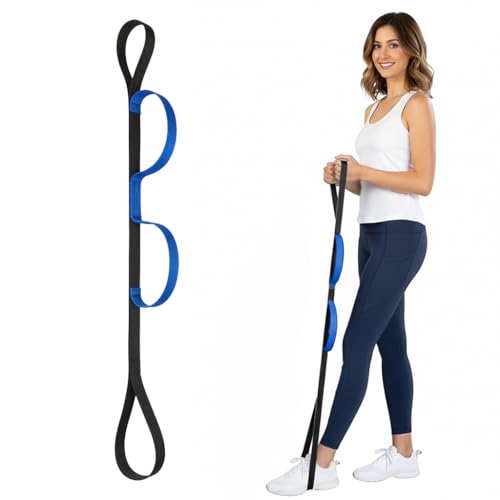
- What you get: 1 Pack Long Leg Lifter.
Why This Matters More Than It Looks Like It Should
This is a small device tied to a genuinely important recovery consideration.
After hip replacement surgery, many patients are given specific movement restrictions — commonly called hip precautions — designed to prevent dislocation of the new joint while it heals.
The American Academy of Orthopaedic Surgeons notes that common precautions include not crossing the legs at the knees and not bringing the surgical-side knee higher than the hip, typically for the first several weeks after surgery (Source).
Reaching down and manually grabbing your own leg to reposition it is exactly the kind of forward-bending, twisting motion these precautions are meant to avoid.
A leg lifter solves that specific problem: it lets you move your leg using your arms and a strap, without bending forward or twisting your hip to grab it directly, which is precisely why hospital rehab teams recommend one for early recovery (Source).
Leg Lifter Types Compared
| Type | Design | Best For |
|---|---|---|
| Strap with foot loop and handle | Simple fabric strap, one or two hand loops | General bed and car transfers |
| Rigid handle leg lifter | Firm handle attached to a foot loop | Users who prefer a more solid grip point |
| Extended-length strap | Longer strap for greater reach | Taller users, higher beds or vehicles |
| Padded/cushioned foot loop | Extra padding where the loop contacts the foot | Sensitive skin, extended or frequent use |

How to Use One Correctly
- Loop the strap around your foot or ankle — most designs work around the arch or heel, whichever is more comfortable for you.
- Hold the handle or strap with both hands for better control, especially early in recovery.
- Lean back slightly rather than forward as you lift, keeping your torso upright to avoid bending past any hip precautions you’ve been given.
- Guide the leg smoothly to its destination — onto the bed, into the car footwell, or over the tub edge — rather than swinging or jerking it.
- Release and reposition your foot manually once the leg is close enough that final adjustment doesn’t require the same range of motion.
Rehab guidance also generally recommends maintaining a straight arm position while lifting and holding the lowest strap loop securely, rather than gripping loosely partway up the strap (Source).
Watch: How to Use a Leg Lifter After Hip or Knee Replacement
What to Look For
- Strap length. Long enough to comfortably reach from a seated or lying position without straining, but not so long it becomes unwieldy.
- Foot loop security. A rigid or semi-rigid loop opening holds its shape better for repeated, one-handed use than a fully floppy fabric loop.
- Material durability. Especially important if you’ll use it in the bathroom or shower area regularly.
- Handle comfort. A padded or contoured handle matters more than it seems for anyone using one multiple times daily during recovery.
- Portability. Lightweight and packable if you’ll move it between bed, car, and bathroom throughout the day.
Common Problems and Fixes
The foot loop keeps slipping off
Check that you’re positioning the loop securely around the arch or heel rather than loosely over the toes, and consider a model with a more rigid loop opening if slipping persists with a soft fabric design.
Difficulty getting enough leverage to lift
This is often a positioning issue — try adjusting your grip further down the strap for more leverage, and lean back slightly rather than trying to lift with your arms alone at an awkward angle.
Discomfort where the loop contacts your foot
A padded foot loop resolves this for most users; in the meantime, a thin sock or cloth between the strap and skin can reduce irritation during frequent use.
Practice Before You Actually Need It
If you know surgery is scheduled, practicing with a leg lifter beforehand — while you still have full mobility — makes the technique far more intuitive once you’re actually recovering and dealing with pain or restricted movement.
Many hospital rehab teams demonstrate proper technique before discharge specifically for this reason, since a device that seems obvious when demonstrated can feel awkward the first time you’re actually managing post-surgical pain and precautions simultaneously.
Keeping the device in a consistent, easy-to-reach location — on the nightstand, in the car, near the bathtub — removes one more obstacle during a recovery period when reaching for or searching for equipment is exactly what you’re trying to avoid.
Who Actually Benefits Most
- Post-hip or knee replacement patients — the clearest, most common use case, especially during the first several weeks of recovery.
- Anyone with limited leg strength or mobility — from neurological conditions, injury, or general age-related weakness.
- Stroke recovery patients — managing a weaker or less responsive leg on one side of the body.
- Caregivers — reduces the physical strain of manually helping someone reposition a leg multiple times a day.
- Anyone with hip flexor weakness or pain — makes routine leg repositioning less painful without needing to actively lift against resistance.
Leg Lifter FAQ
How long after hip surgery will I need one?
This varies by patient and surgical approach, but many hip precautions and the associated need for assistive devices like a leg lifter commonly ease significantly within 6 to 8 weeks — follow your specific surgeon’s or physical therapist’s guidance rather than a general timeline.
Can I use a leg lifter without any surgery or injury, just for general mobility support?
Yes — many users with general leg weakness, arthritis, or limited flexibility use one as an everyday mobility aid, not exclusively for post-surgical recovery.
Is it hard to learn to use one?
Most people find the basic technique intuitive within the first few uses, though rehab staff or physical therapists typically demonstrate proper technique for post-surgical patients before discharge.
Can I make my own instead of buying one?
Simple versions can be improvised from a sturdy strap or belt, though a purpose-made leg lifter typically offers a more secure, comfortable foot loop than an improvised alternative.
Do I need to follow specific hip precautions while using one?
Yes, if you’ve been given specific movement restrictions after surgery — a leg lifter helps you follow those precautions more easily, but it doesn’t override them, so continue following your surgeon’s or therapist’s specific guidance.
The Bottom Line
A leg lifter is a small, inexpensive device that solves a specific and genuinely common problem: safely repositioning a leg you can’t easily lift or reach without bending, twisting, or straining.
It’s especially valuable during the early weeks of hip or knee replacement recovery, when following movement precautions matters for protecting the healing joint.
For related recovery and mobility support, see our guides to hip flexor support braces and bed rails.